Mobile Interface Designs Shaping Bonus Redemption Success in Regulated Markets
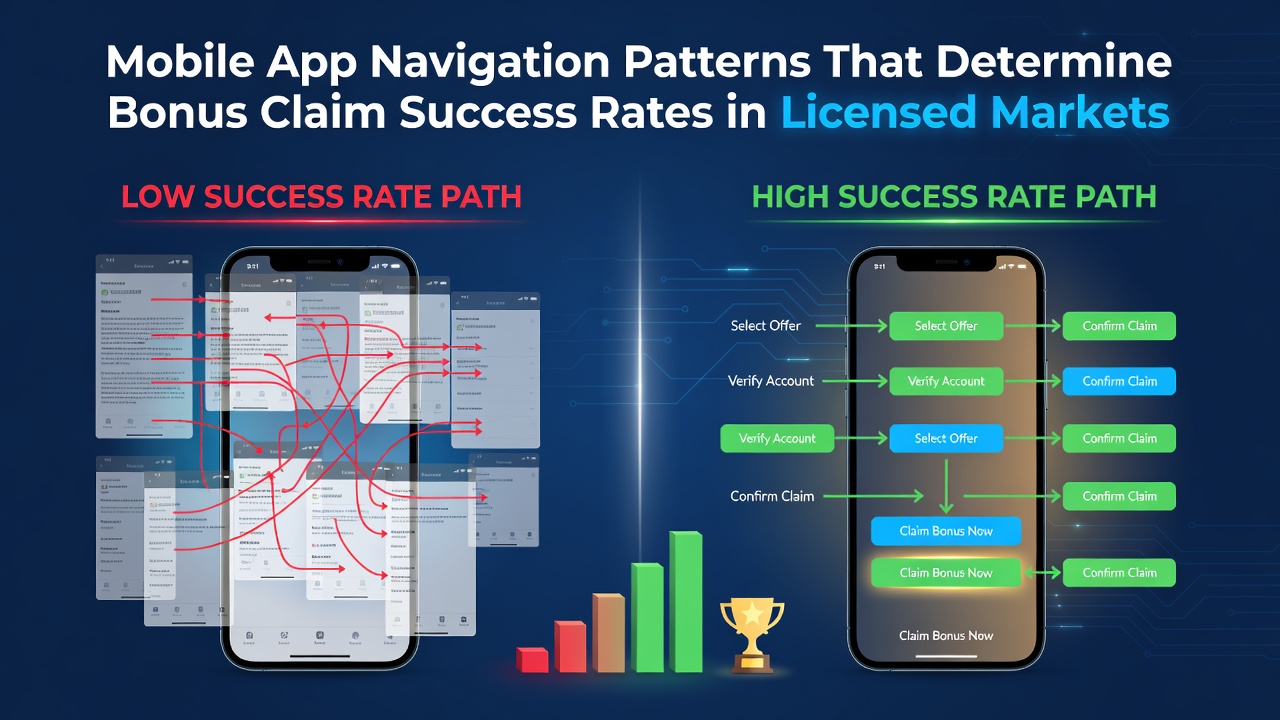
Navigation structures inside licensed mobile betting applications directly influence how often users complete bonus claims, according to multiple industry analyses conducted through 2026. Researchers tracking user sessions across platforms in North America and Europe have documented clear correlations between menu placement, button hierarchy, and successful redemption rates, with patterns emerging most consistently in markets where regulators require transparent terms display.
Observers note that applications featuring a persistent bonus tab within the main navigation bar achieve higher claim completion compared to those burying offers inside submenus. Data from platform audits shows this single design choice reduces drop-off during the initial discovery phase, since users locate active promotions without additional taps or searches. Those who've examined session logs point out that the first three seconds of app interaction often determine whether a player proceeds to claim or exits the flow entirely.
Button Placement and Flow Sequence Patterns
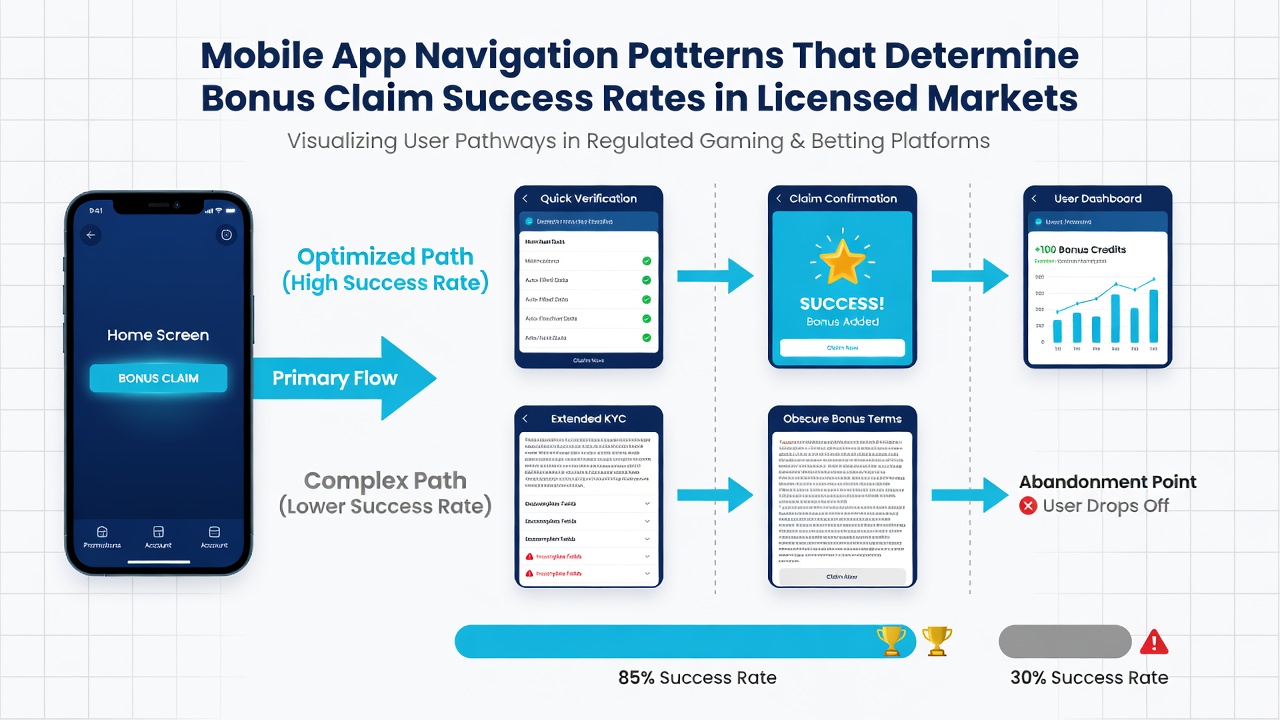
Studies tracking thousands of mobile sessions reveal that prominent claim buttons positioned above the fold, combined with one-tap confirmation screens, correlate with elevated success metrics. In contrast, designs requiring multiple confirmation layers or redirecting users through account settings tend to see lower completion, particularly when terms and conditions appear only after several navigation steps. Analysts examining July 2026 usage data across several U.S. states found that apps simplifying the sequence to three screens or fewer maintained steadier redemption volumes even during peak traffic periods.
What's interesting is how personalization affects these outcomes. Platforms that surface tailored bonus offers based on prior activity within the primary dashboard demonstrate stronger engagement than generic promotions placed in a universal promotions section. Researchers from academic groups studying digital wagering interfaces have linked this personalization to reduced friction, noting that users who receive contextually relevant offers navigate fewer unrelated pages before completing claims.
Regional Regulatory Influences on Design Choices
Licensed markets impose varying requirements for bonus visibility and terms accessibility, which in turn shape navigation architecture. In jurisdictions such as those overseen by the New Jersey Division of Gaming Enforcement, operators must ensure terms appear before any claim action, leading developers to integrate expandable disclosure panels directly into the claim flow rather than linking externally. Similar approaches appear in Australian regulatory frameworks, where operators embed verification steps within the same navigation path to comply with responsible gambling mandates.
But here's the thing about cross-market consistency: applications serving multiple licensed regions often deploy modular navigation components that adapt based on user location. This adaptability allows the same core app to meet different disclosure standards while preserving similar user paths. Reports from the Canadian Gaming Association indicate that such modular systems have contributed to more uniform bonus claim rates across provinces despite differing local rules.
Search and Onboarding Integration Effects
Search functionality within apps also plays a measurable role. When users can locate active bonuses through a prominent search bar rather than browsing layered menus, completion rates improve according to aggregated platform data. Those studying these interfaces have observed that onboarding sequences introducing bonus navigation early, such as during account verification, establish habits that carry forward into subsequent sessions.
Turns out the timing of these introductions matters as well. Apps presenting navigation tutorials or tooltips specifically about bonus sections within the first login experience show sustained improvements in claim success, whereas delayed guidance correlates with higher abandonment. Industry reports released in mid-2026 highlight how these early interventions align with regulatory expectations for clear communication in licensed environments.
Analytics-Driven Adjustments Observed in 2026
Operators increasingly rely on heat-mapping and session-recording tools to refine navigation patterns in real time. Figures from multiple platform providers reveal that iterative adjustments to menu ordering, based on actual user paths, have produced measurable lifts in bonus-related conversions without altering promotional value. These refinements often focus on reducing the distance between discovery and action, such as collapsing account balance checks into the same view as active offers.
What's significant is the role of A/B testing across different device types. Navigation that performs well on larger tablets sometimes underperforms on compact phones due to thumb-reach limitations, prompting developers to create responsive layouts that maintain claim accessibility regardless of screen size. Data shared by research institutions studying mobile wagering confirms these device-specific patterns persist across licensed markets.
Conclusion
Navigation patterns in licensed mobile apps continue to evolve alongside regulatory standards and user behavior data, with measurable impacts on bonus claim outcomes documented through 2026. Elements such as tab placement, sequence length, personalization, and integrated search functions demonstrate consistent associations with redemption success across jurisdictions. As platforms refine these designs through ongoing analytics, the relationship between interface structure and user completion remains a central focus for operators seeking to align with both compliance requirements and engagement metrics.