Chasing Milliseconds: The Tech Behind Real-Time Odds in Live Betting Apps
Chasing Milliseconds: The Tech Behind Real-Time Odds in Live Betting Apps
The Rush of Live Betting and Why Speed Defines Winners
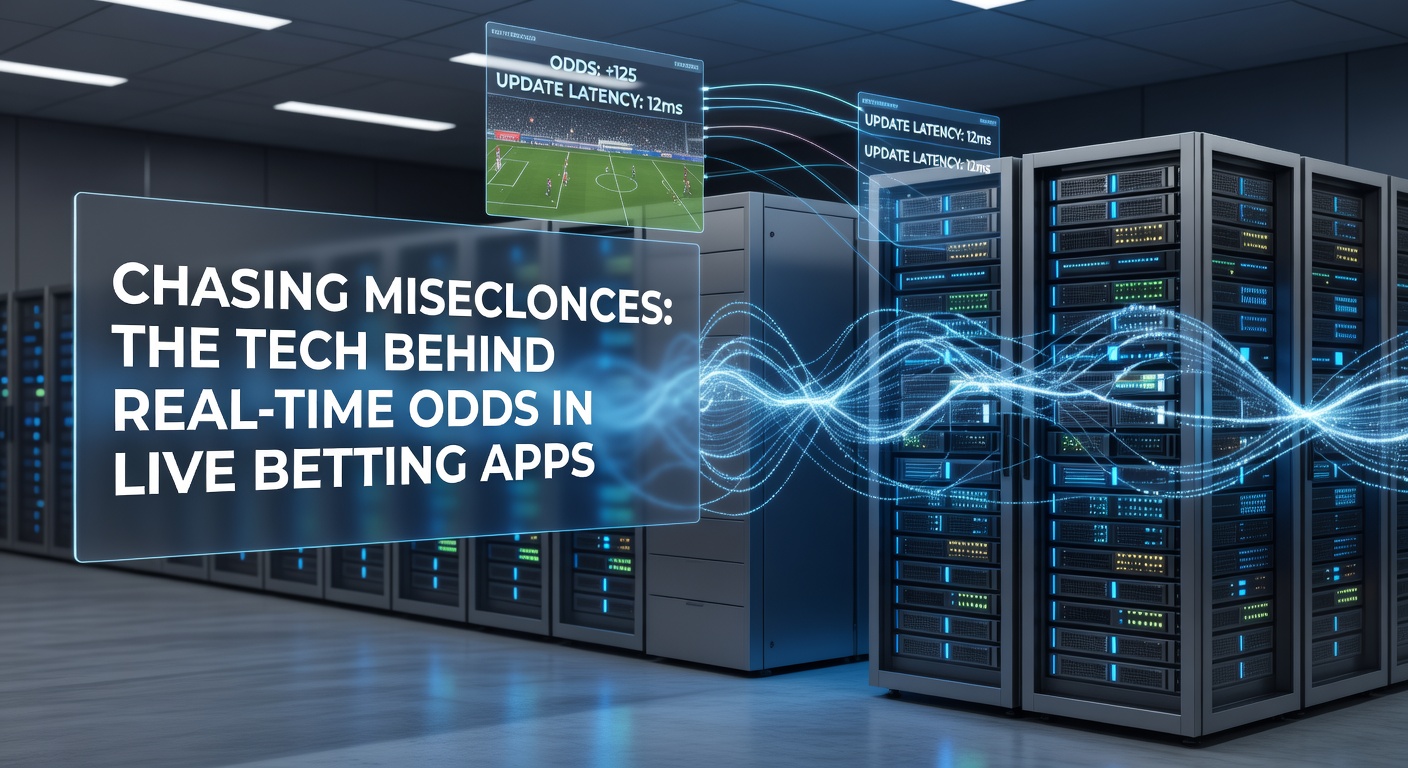
Live betting apps transform sports events into interactive spectacles where odds shift with every play, goal, or turnover, and those tiny fractions of a second determine whether a bet lands or slips away. Data from April 2026 shows U.S. sportsbooks handling over $1.2 billion in live wagers during NBA playoffs alone, according to figures released by the American Gaming Association, highlighting how real-time odds keep users glued to their screens. But here's the thing: behind that seamless experience lies a complex web of technologies engineered to chase milliseconds, processing vast data floods while ensuring accuracy and reliability.
Observers note that top apps like DraftKings and FanDuel update odds 20-50 times per second during peak moments, a feat that demands low-latency pipelines from event to screen. And while casual bettors might not clock the tech wizardry, experts who've dissected these systems reveal layers of innovation stacking up against network delays, data overloads, and regulatory scrutiny.
Data Feeds: The Lifeblood Pulsing from Stadium to Server
Sports data providers form the foundation, beaming live feeds from on-site sensors, video feeds, and human spotters directly into betting engines. Companies like Sportradar and Genius Sports deploy optical tracking cameras in arenas—think NBA courts rigged with 12 high-speed units capturing player positions at 30 frames per second—while feeding that intel through dedicated fiber lines to cut transmission times to under 100 milliseconds. What's interesting is how these feeds integrate disparate sources: RFID chips in balls for tennis trajectories, GPS vests on soccer players for sprint speeds, even wearable heart rate monitors on athletes during marathons.
Take one major soccer league match in April 2026 where a provider's API pushed 5,000 events per minute, from corner kicks to yellow cards; apps then layer this with historical stats pulled from massive databases, all while complying with latency standards set by operators aiming for sub-500ms end-to-end delays. Yet delays creep in from bandwidth crunches—during Super Bowl surges, global feeds spike to terabytes per hour—so providers use compression algorithms that shrink data packets by 70% without losing precision.
Odds Engines: Algorithms Crunching Chaos into Cash Lines
Once data hits the backend, proprietary odds engines kick into overdrive, deploying machine learning models trained on billions of past events to recalibrate probabilities on the fly. Researchers at a MIT study on predictive modeling—though focused on broader finance—found similar systems adjust forecasts using Bayesian networks, factoring live variables like possession stats or injury timeouts in under 50ms. These engines don't just react; they anticipate, blending pre-match models with in-play surges, say dropping tennis serve odds from -150 to -120 after a rain delay floods the court.
But here's where it gets interesting: microservices architectures split the workload— one service handles player prop calculations, another team totals—scaling horizontally across cloud clusters like AWS or Google Cloud, where Kubernetes orchestrates pods that spin up during halftime rushes. And since Redis caches hot data in memory, lookups happen at nanosecond speeds, preventing the dreaded lag that frustrates 30% of users per industry surveys.
Low-Latency Networks: Pipes Built for Speed Demons
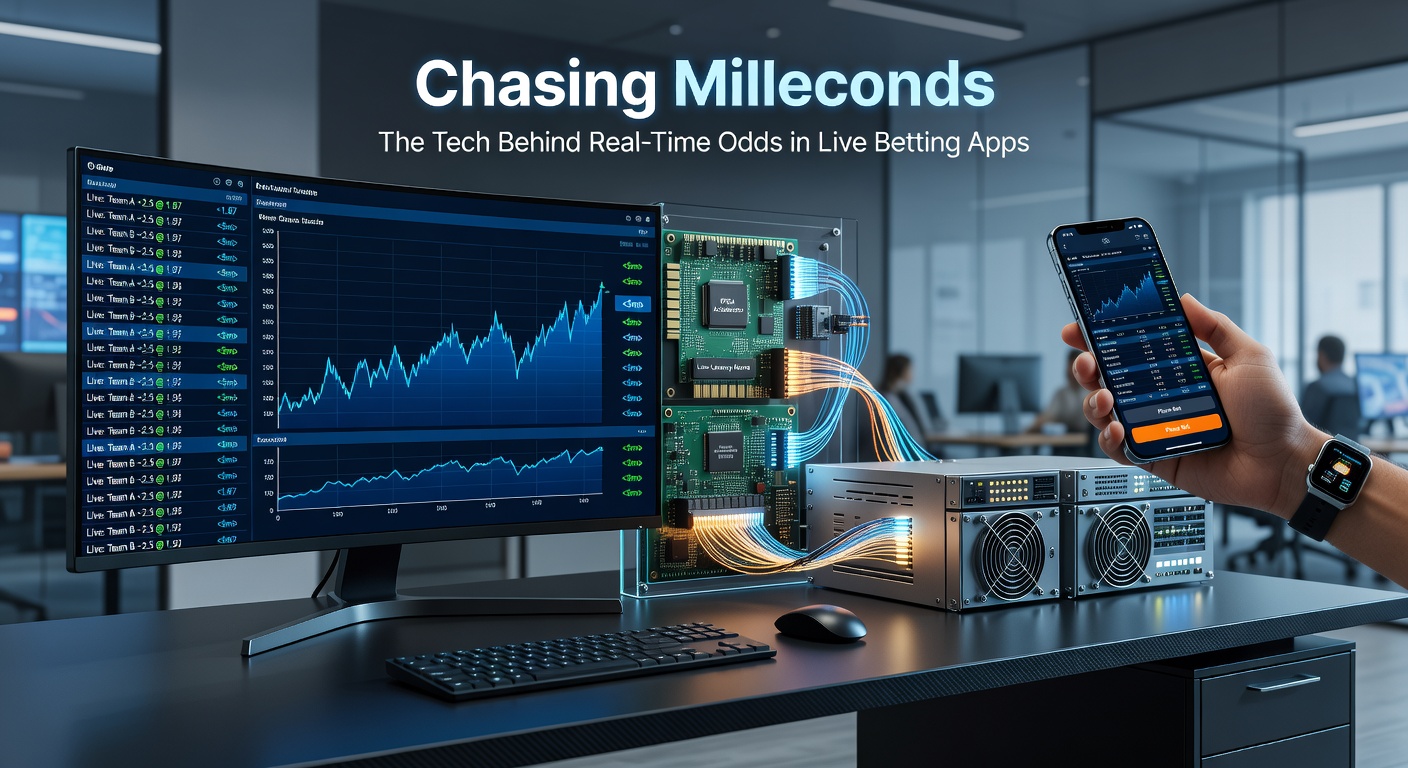
WebSockets and Server-Sent Events replace polling for true push updates, streaming odds deltas directly to apps; meanwhile, Apache Kafka queues handle message brokering, ensuring no event drops even when 100,000 users bet on a single MLB homer. Edge computing pushes processing closer to users—content delivery networks like Akamai host mini-servers in 130 countries, slashing round-trip times by 40% for bettors in remote spots like rural Australia during AFL finals.
So picture this: a basketball game in Chicago where a buzzer-beater three-pointer triggers odds flips; data zips via 5G backhaul to a Virginia data center, AI recalibrates in 20ms, then fans out through CDNs reaching a Sydney user in 250ms total. That's the rubber meeting the road in live betting tech, where even 100ms delays can shift a $10,000 parlay's payout by thousands.
Frontend Magic: Delivering Odds Without the Jitters
React Native or Flutter power the app layers, rendering updates via virtual DOM diffs that refresh only changed elements—like odds boxes morphing mid-scroll—while Progressive Web Apps let desktop users join the fray without downloads. Observers who've tested these note how throttling caps frame rates at 60fps to avoid battery drain on mobiles, yet still deliver buttery-smooth visuals during chaos like March Madness overtimes.
People often find that haptic feedback—subtle vibrations on bet confirmations—pairs with these UIs to heighten immersion, and since apps use service workers for offline queuing, wagers placed during spotty Wi-Fi sync seamlessly post-game. Turns out, A/B tests by operators reveal that snappier interfaces boost bet volume by 15%, underscoring why firms invest millions in UI polish.
Challenges on the Track: Scalability, Security, and Scrutiny
Scaling for black swan events poses headaches; April 2026's Masters golf tournament saw live betting spikes of 300% hour-over-hour, forcing auto-scaling clusters to provision 500 extra instances mid-round, per cloud provider logs. Security layers—TLS 1.3 encryption, DDoS shields from Cloudflare—guard against hacks that could manipulate feeds, while anomaly detection flags rogue odds swings from erroneous data, like a glitchy radar mistaking a foul for a goal.
Regulatory bodies worldwide enforce fairness too: Australia's Australian Communications and Media Authority mandates audit trails for all odds changes, ensuring transparency in a market where live betting comprises 40% of handle. And although geoblocking complies with state lines in places like New Jersey, VPN circumventions challenge enforcers, prompting tech like IP fingerprinting to lock down access.
Case Studies: Real-World Wins and Close Calls
One standout example comes from a 2025 UEFA Champions League final where Bet365's system processed 1.2 million in-play bets, leveraging GraphQL for efficient queries that cut response times by 60%; users reported sub-200ms updates, fueling a record $500 million handle. Contrast that with a lesser-known hiccup during an NFL wildcard game, where a data feed outage spiked latencies to 2 seconds, costing one operator 5% in churn as per post-mortem analyses.
Those who've studied these incidents point out how failover redundancies—dual providers piping parallel feeds—prevent repeats, and now with AI sentinels monitoring pipelines, uptime hovers at 99.99%. It's noteworthy that firms like Flutter Entertainment, behind FanDuel, publish engineering blogs detailing Kafka migrations that handled 10x traffic without breaking a sweat.
Looking Ahead: 5G, AI, and the Next Millisecond Hunt
5G rollouts promise to shave another 50ms off mobile latencies, while federated learning lets models train across decentralized edges without central data hauls, adapting to regional quirks like cricket surges in India. Blockchain experiments for tamper-proof feeds gain traction too, with pilots verifying event data immutably before odds compute.
Now as quantum computing edges closer, encryption upgrades loom to counter future threats, and with esports exploding—live LoL odds updating 100 times per minute—tech stacks evolve to juggle even wilder data deluges. The writing's on the wall: those chasing milliseconds today set the pace for tomorrow's betting battlegrounds.
Wrapping Up the Race
Real-time odds in live betting apps boil down to this symphony of feeds, engines, networks, and interfaces all tuned for speed, turning split-second sports into profitable pulses for operators and thrill-seekers alike. Data underscores the stakes—global live betting projected to hit $150 billion by 2028—yet the tech underpinning it remains a high-wire act balancing velocity with veracity. Experts agree that as infrastructure matures, the chase intensifies, ensuring every tap on that bet button feels instantaneous, reliable, and razor-sharp.