23 Aug 2026
Behind the Screens: How Licensing Shapes the Development of Advanced Betting Tools

Regulatory frameworks and software licensing agreements dictate the architecture of advanced betting tools in ways that extend far beyond surface-level compliance, and developers must navigate these constraints while building features for real-time analytics, risk management, and user personalization. Licensing requirements from state authorities and international bodies force specific technical integrations early in the design phase, which means teams allocate resources to embed responsible gaming protocols and data encryption standards before any user-facing elements take shape.
Regulatory Mandates Drive Core Architecture Decisions
State-level gaming commissions impose detailed technical specifications that directly influence how betting platforms handle odds calculation engines and live data feeds, and these rules often require third-party audits at multiple development stages. In August 2026, several U.S. jurisdictions updated their certification processes to include mandatory API documentation standards, which pushed software teams to redesign their data pipelines for greater transparency. Observers note that companies operating across multiple states must maintain separate code branches to satisfy varying jurisdictional demands, and this fragmentation increases both development timelines and testing overhead.
Research from industry groups shows that platforms licensed in multiple markets spend up to 30 percent more engineering hours on compliance modules compared to single-jurisdiction operators, and these modules cover everything from geofencing accuracy to transaction logging formats. Developers therefore prioritize modular code structures that allow quick adaptation when new licensing terms appear, rather than building monolithic systems that prove difficult to update.
Software Licensing Limits and Enables Feature Integration
Third-party technology licenses for data providers, odds compilers, and fraud detection services come with strict usage clauses that shape which advanced features reach production, and teams often discover that certain machine learning models cannot incorporate external datasets without violating contract terms. One development studio working on a multi-state sportsbook found that its preferred real-time risk engine required a separate licensing agreement for each jurisdiction because the data source retained geographic restrictions, and this discovery delayed rollout by several months while legal teams negotiated adjustments.
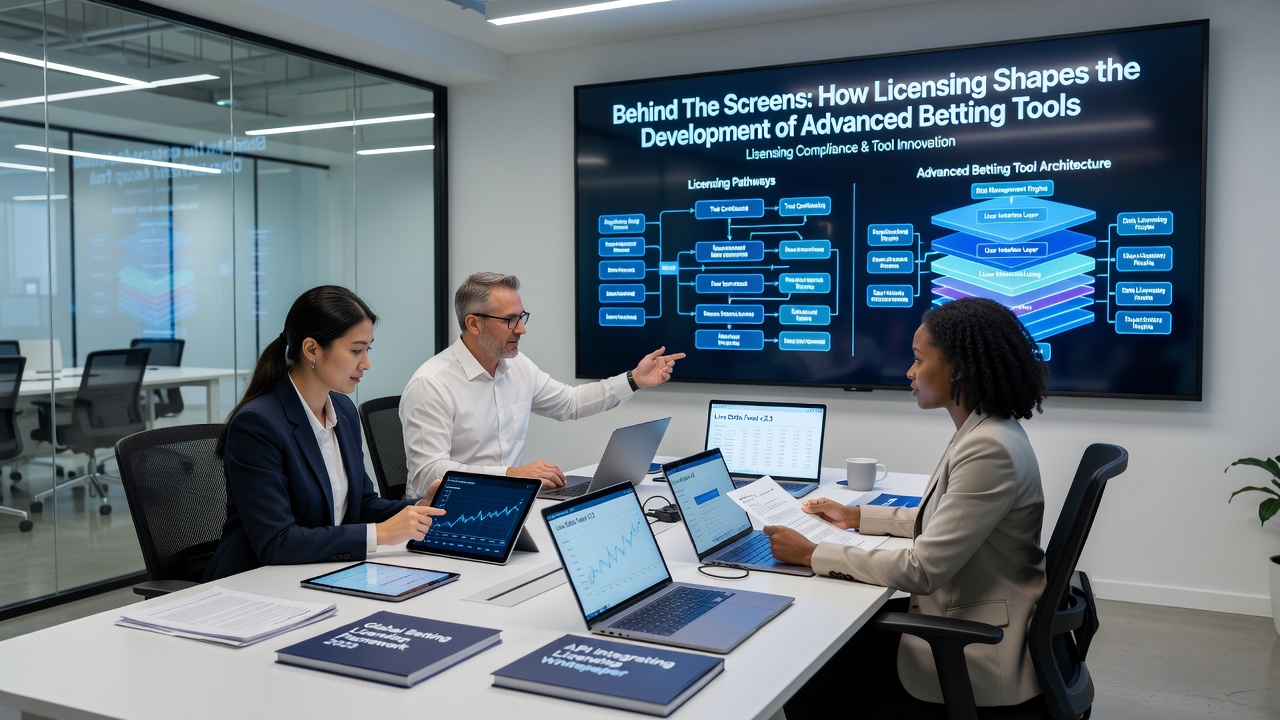
According to figures from the New Jersey Division of Gaming Enforcement, platforms must demonstrate that all licensed components maintain audit trails spanning at least five years, and this requirement forces developers to build comprehensive logging systems into every analytics dashboard and automated trading tool. New Jersey Division of Gaming Enforcement reports further indicate that operators who streamline their licensed technology stack see faster approval times for new features, which creates a competitive incentive to consolidate vendors early in the planning process.
Geographic Variations Create Distinct Development Paths
European licensing regimes, such as those administered by the Malta Gaming Authority, emphasize player fund segregation and independent testing laboratories in ways that differ from North American approaches, and these differences require betting tool developers to maintain parallel feature sets. Australian regulatory updates in 2026 introduced new standards for harm minimization algorithms, which compelled international providers to retrofit existing personalization engines with additional behavioral triggers. Teams that operate globally therefore maintain dedicated compliance engineers who track licensing changes across regions and translate those changes into technical specifications.
Data from academic studies on iGaming infrastructure reveals that licensing complexity correlates with slower adoption of certain emerging technologies like blockchain-based settlement systems, and operators cite uncertainty around how such systems would satisfy existing audit requirements as the primary barrier. Yet developers continue to explore hybrid solutions that satisfy multiple licensing frameworks simultaneously, and this experimentation has produced new middleware layers designed specifically for cross-jurisdictional compatibility.
Conclusion
Licensing structures ultimately determine the pace and direction of innovation in advanced betting tools by setting non-negotiable boundaries around data usage, security protocols, and feature availability. Development teams that treat these constraints as fixed parameters rather than obstacles produce more resilient platforms, and the pattern holds across both established operators and newer market entrants. As regulatory environments continue to evolve, the technical decisions made today will define which capabilities become standard in future betting environments.